
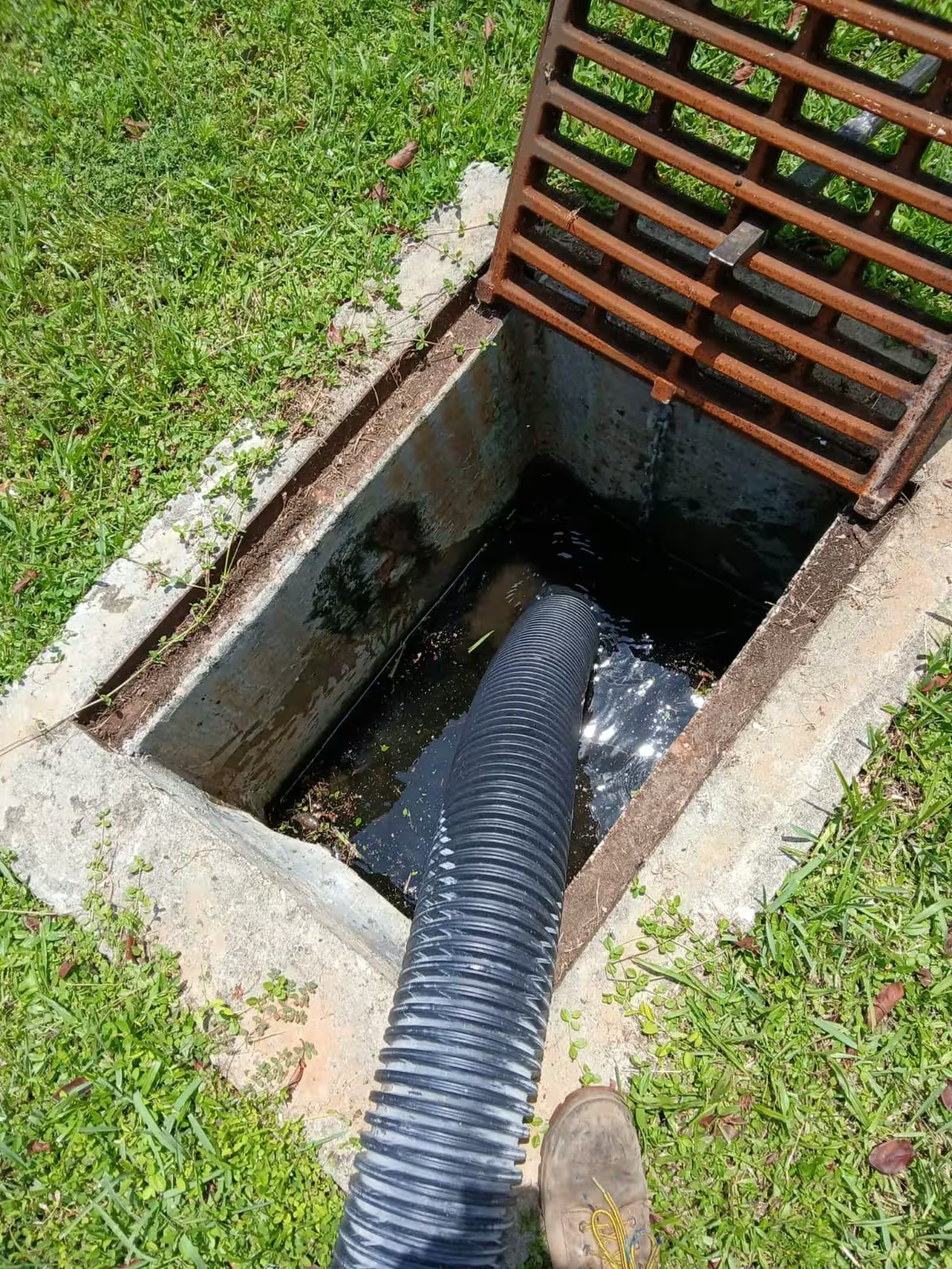
Storm drain cleaning in Fort Lauderdale, FL
Storm drain cleaning in Fort Lauderdale runs straight into the city's tidal-flooding problem. Sunny-day flooding on Las Olas, surge backups along the New River, and aging east-side inlets that silt up between rains. We clean, jet, and document storm-drain systems for downtown towers, Las Olas mixed-use, and waterfront HOAs across the city, and we tie the work to the Broward Surface Water Management license the property has to keep current.
- Written quote in 48 hoursFixed fee. Never increases.
- Zero-Denial GuaranteeRejected? We refile at no cost.
- Insured & bondedFlorida PE on staff.
Is your license expired right now?
Most boards don't know. We pull the county record and tell you the license number, status and expiration date.
Storm drain cleaning Fort Lauderdale: local stormwater context
Fort Lauderdale operates a City MS4 under FDEP NPDES Phase II and has been actively upgrading tidal-valve and pump infrastructure across the east side. But on-site catch basins and lateral pipe runs are still the property owner's responsibility. East-of-Federal sites drain into the New River and tidal canals, so saltwater intrusion, sediment, and debris build up faster than inland sites.
Many commercial properties, HOAs, condominiums, and industrial sites in Broward also hold a Surface Water Management (SWM) operating license issued by the county's Environmental Engineering and Permitting Division. Not every property holds one, and the terms differ by license, so the first step is confirming what is actually on record. Where a license exists, it carries its own expiration date, commonly a five year term, and renewing it requires a Florida-licensed professional engineer to inspect the drainage system and certify it. A clean, documented system is what makes that inspection pass, which is why cleaning and 5-year drainage recertification are the same conversation here.
Most modern detention and exfiltration systems also carry an SFWMD ERP with a recurring O&M inspection requirement now governed by the updated Chapter 62-330 rules; qualified-inspector certification is acceptable for routine inspections in most cases. How the two obligations differ is covered in our Florida stormwater compliance guide.

Fort Lauderdale gets rain and tide at the same time, and a blocked outfall turns both into standing water.
Catch basin cleaning in Fort Lauderdale, FL
Fort Lauderdale basins east of Federal Highway fight saltwater, sand, and tidal backflow on top of normal sediment, while Cypress Creek corridor sumps load with office-park runoff and landscape debris. On tidal properties we time outfall work to the low-tide window so the report shows a real invert instead of an underwater guess. Every structure is vacuumed to the invert with before-and-after photos tied to its ID.
Cleaning has a $1,500 job minimum covering up to 5 structures. Larger jobs are $130 to $275 per structure, subject to the minimum; heavy or treatment structures add $150 each. Waterfront sites do best on a quarterly cadence, inland HOAs annually with a post-storm sweep. See the catch basin cleaning service page for scope, the 2026 cost breakdown for per-structure numbers, and the storm drain cleaning cost guide for jetting and CCTV footage rates.
Fort Lauderdale is our closest market, so crews stage locally and low-tide windows get booked first.
- Las Olas Boulevard and downtown plaza drains
- New River-fronting condo associations
- Beach corridor A1A hotels and HOAs
- Coral Ridge and Victoria Park older inlets
- Cypress Creek office and industrial corridor
- Plantation, Sunrise, Davie, Oakland Park, Pompano Beach, and Coral Springs commercial pads
Tidal outfalls, king tides, and tide-flap failure on the New River side
Fort Lauderdale is the one city on our map where the ocean pushes back into the pipe. Any property draining to the New River, the Tarpon River, the Middle River, or a finger canal off the Intracoastal has an outfall that spends part of every day submerged. The tide flap. A hinged flapper or a duckbill check valve on the headwall. Is the only thing keeping salt water from running backwards up the line at high tide.
Flaps fail quietly. Barnacle growth on the seat, a bent hinge pin, a rubber duckbill that has gone stiff after eight Florida summers: none of that is visible from the parking lot. What you see instead is brackish water standing in the low corner of the lot on a dry, sunny day, a white salt crust around the grate, and sediment that keeps coming back three months after a cleaning because the tide keeps re-depositing it. During the seasonal king tides, when the highest tides of the year coincide with the lowest system capacity, the same failure stops being cosmetic and starts putting water across the lot with no rain at all. We check the outfall at low tide, camera the last run of pipe from the structure seaward, and photograph the flap seated and unseated so the condition is documented rather than assumed.
Cleaning a tidal system is also a scheduling problem. Vacuuming a basin that is half full of tidewater pulls water, not sediment, and you pay for the difference. We schedule tidal work on the falling tide so the crew is removing muck instead of the Intracoastal.
The Broward SWM license and the five-year renewal clock
The obligation most Fort Lauderdale property managers inherit without being told about it is the Surface Water Management operating license. It is issued by Broward County's Environmental Engineering and Permitting Division, it attaches to the property's drainage system rather than to the owner, and it expires on its own date, commonly five years out. Renewal is not a form. A Florida-licensed professional engineer has to inspect the system and certify it before the county will extend the license.
Licenses lapse mostly at handover. The property sells, the management company changes, the engineer who filed last time has no relationship with the new manager, and the expiration date lives in a file nobody opened. An expired SWM license is a code violation, and Florida Statutes section 403.121 authorizes civil penalties for environmental violations, which is a materially worse conversation than scheduling the inspection would have been.
Practically, the cleaning and the certification are one project. We vacuum and jet the system, the staff engineer inspects what is now visible, and the sealed certification goes to the county with the photo log attached. Full scope and flat-fee structure are on the Broward 5-year drainage recertification page.
Downtown, Las Olas, and the Flagler Village corridor
The downtown core and the Las Olas corridor are the hardest sites in the county to work cleanly. Inlets sit in active valet lanes and sidewalk cafe zones, loading is restricted, and half the structures are trench drains at garage ramps rather than standard curb inlets. A garage ramp trench that backs up sends water into a parking structure, which is a very different phone call than a puddle in a strip-center lot.
We work this corridor before opening (typically a 5:00 to 9:00 a.m. window) with cones and a spotter so valet operations and restaurant deliveries never stop. Debris here is distinctive: cooking grease from the restaurant row, cigarette filters, sidewalk sand, and the fine gray silt that comes off years of adjacent high-rise construction. Grease-bound inlets on Las Olas typically need a quarterly cadence; a once-a-year cleaning schedule on that block is a schedule that fails in August.
West Broward and the northern submarkets we run out of Fort Lauderdale
Fort Lauderdale is where crews stage, and the surrounding Broward submarkets work differently from the coast. Plantation and Davie are association and campus territory: detention ponds, control structures, and long inlet runs under mature tree canopy, where leaf and mulch load is the thing that fills a sump between visits. Sunrise and Coral Springs add large planned communities and retail centers built around canal outfalls, where the pipe network is usually intact and the recurring work is structure-level cleaning plus the periodic inspection the permit calls for.
Oakland Park and Pompano Beach sit back toward the coast, so they get a mix of both: inland commercial pads with ordinary sediment load, and eastern parcels close enough to tidal water that outfall condition matters again. None of these are separate service lines. They are the same vactor, jet, CCTV, and documentation scope on a different cadence, dispatched off the same Broward rotation described on the Broward County service area page.
How the city stormwater fee changes the maintenance math
Fort Lauderdale bills stormwater as a separate utility charge based on impervious area, not as a line item buried in property taxes. Owners of large paved sites, such as retail centers, dealership lots, and industrial yards, see a real number on the bill every month and can compare it directly against what they spend keeping their private system working. That comparison usually favors maintenance: a single flood event that closes a retail lot for a day costs more than a year of scheduled cleaning.
It also matters that the fee funds the public system, not yours. Everything from your inlet to the point of connection is private and is your responsibility to keep clean and documented. When the City asks for evidence during an MS4 audit, or when the engineer needs it for a 5-year drainage recertification, what they want is structure-by-structure photos and debris volumes. Which is exactly what our report format delivers. See our tidal outfall maintenance guide for the inspection sequence we use on saltwater-influenced systems.
Scope, cadence, and pricing for every Fort Lauderdale service we run are detailed here: storm drain cleaning, catch basin cleaning, hydro jetting, vacuum truck and vactor service, CCTV pipe inspection, and parking lot drain cleaning.
Why coastal outfalls fail differently, and the low-tide inspection cadence beachside properties should follow.
What property managers say about the work.
Property managers, board presidents, facilities directors and engineers across all three counties.
Our apartment parking lot in Miramar kept flooding, and my kids and I would get soaked trying to reach the car before school. SF Storm Drain came out in less than a day and cleaned out the drains. It rained hard last week, and the parking lot did not flood at all. We got to school dry and without any problems. Great service.Carlos MartinezApartment community, MiramarGoogle review
I'm a nurse and the hospital parking lot would flood every time we got heavy rain. I would end up walking into work with wet shoes and soaked pants. SF Storm Drain came out, cleaned the drains, and fixed the problem.Adel SalomonHospital campusGoogle review excerpt
Pricing was the same number they quoted. That's harder to find than it should be.Facilities DirectorOffice park, Broward
Storm drain cleaning Fort Lauderdale: FAQs
Does tidal outfall access change what a Fort Lauderdale cleaning costs?
How does cleaning relate to our Broward SWM license renewal?
How do we find out whether our Fort Lauderdale property even holds an SWM license?
Can you handle Las Olas and downtown work after hours?
Do you document for Fort Lauderdale's MS4 program?
How often should Fort Lauderdale waterfront properties clean inlets?
Nearby cities we serve
Need documentation before the next storm season?
We start with permit records and aerials. If the job needs a look in person, we schedule a walk. Either way you get a written, fixed fee quote within 48 hours.